 blog
7 Paint Correction Before and After Results That Show What's Possible
Last Updated: November 2, 2026
Quick Summary
Paint correction before and after results show the same panel under the same light, with swirl marks and scratches removed and gloss restored. A fair comparison needs identical lighting, angle and framing on both sides, so you are judging the paint rather than the photographer.
- One step paint correction is one polishing stage, which may include multiple passes, not full defect removal.
- Two-step correction separates a cutting stage from a finishing stage, giving cleaner results under harsh light.
- Professional correction labor can run from 4 to 30 hours depending on paint condition.
- Full correction is generally recommended no more than once every three to five years.
- Deep scratches that catch a fingernail, rock chips and clear coat failure cannot be polished out.
Table of Contents
- What Paint Correction Before and After Results Actually Show
- One-Step Paint Correction Results: What One Polishing Stage Achieves
- Two-Step Paint Correction Results: Cutting and Finishing Separated
- How Long Does Paint Correction Take From Drop-Off to Pickup
- Paint Correction and Ceramic Coating: Why the Pairing Decides the Outcome
- What Paint Correction Cannot Remove
- How to Verify Results Before You Book
- Request a Vehicle-Specific Paint Correction Estimate
- Frequently Asked Questions
What Paint Correction Before and After Results Actually Show
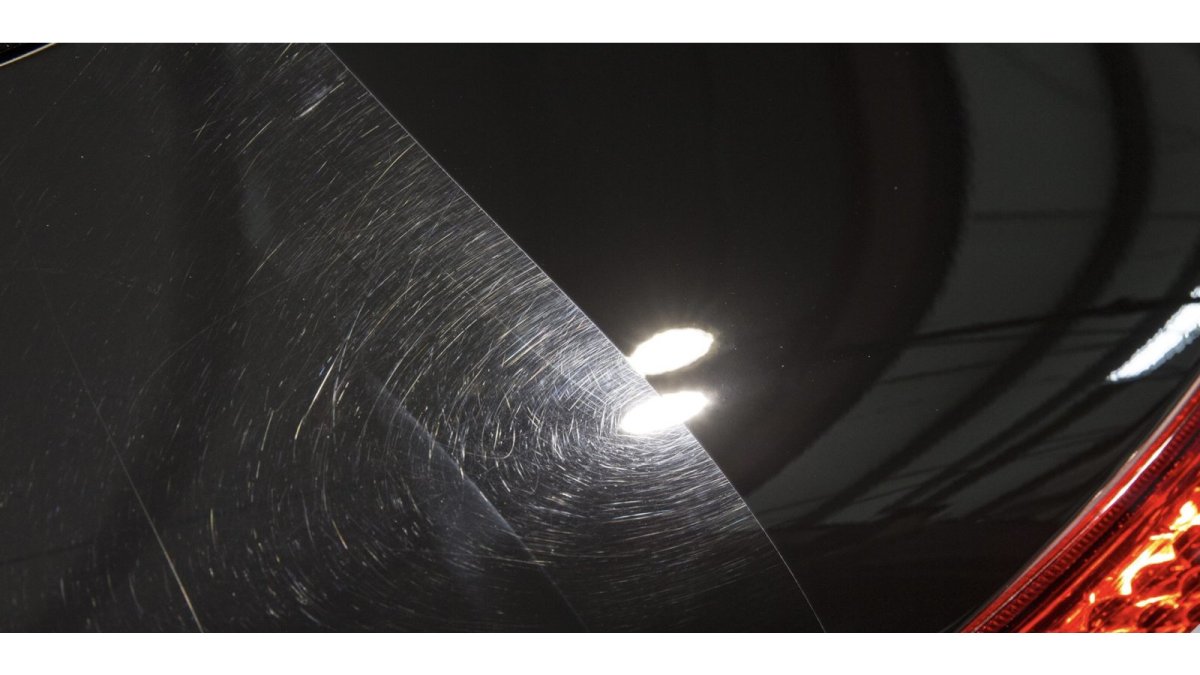
Paint correction before and after results show the same panel under the same light, with swirl marks and scratches removed and gloss restored. That is the whole claim. Everything else in a photo, the angle, the lighting, the crop, changes how dramatic the result looks.
A fair comparison needs identical conditions on both sides. Otherwise you are judging the photographer, not the paint.
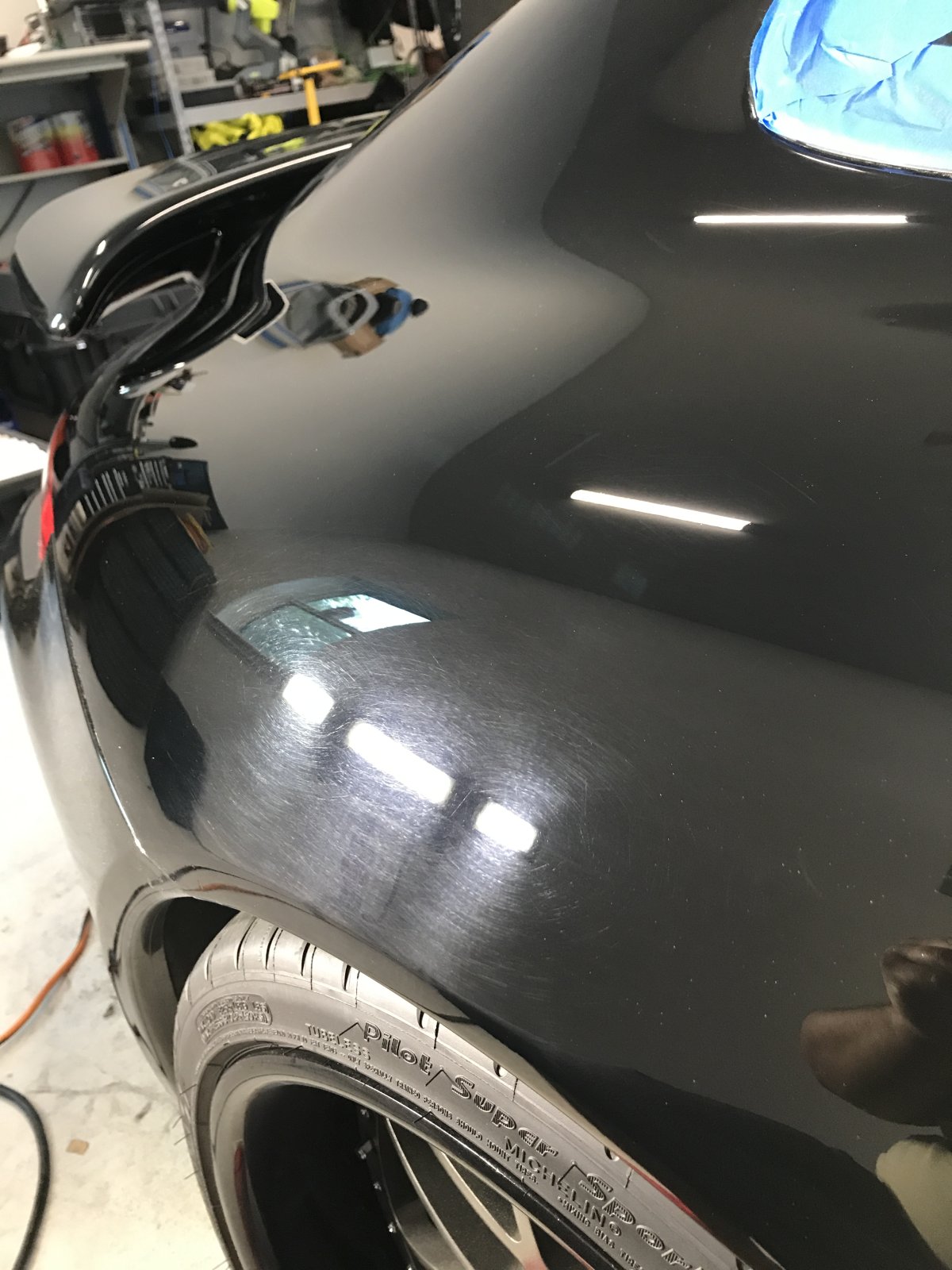
Reading a Before and After Photo Honestly
Look for four things in any correction photo:
- Same light source. Swirls hide in flat light and appear under direct sun or a focused lamp.
- Same angle. A low angle reveals defects a straight-on shot will never show.
- Unedited reflections. Sharp, mirror-like reflections of overhead lights signal real clarity.
- Panel close-ups. Hood and trunk shots matter more than full-car glamour photos.
A common mistake is judging paint from three feet away in a dim garage. Black paint often looks fine at distance and shows heavy defects up close, which is why multi-stage work is sometimes needed case study on black paint defect visibility.
One-Step Paint Correction Results: What One Polishing Stage Achieves
One step paint correction is one polishing stage, which may include multiple passes. It is not a full defect removal job.
Results from a 1 Step package vary with paint condition. Some deeper scratches may remain visible under close inspection, and the finish is prepared for coating after proper preparation.
Where a 1 Step Package Fits
A 1 Step suits daily drivers with mild wear, or owners who want a strong improvement without chasing every mark. If your paint has heavier swirling, a two-stage approach usually makes more sense. You can see how our packages are structured on the paint correction service page.
Two-Step Paint Correction Results: Cutting and Finishing Separated
Two-step paint correction results go further because the work is split in two. A cutting stage removes defects, then a finishing stage refines the surface. That separation is why 2 Step and Pinnacle results look cleaner under harsh light.
Labor reflects that. Professional correction can run from 4 to 30 hours depending on condition detailer discussion of correction labor times. Some deep scratches should stay in the paint rather than risk the clear coat.
When a 2 Step or Pinnacle Package Is the Right Call
Two-step or Pinnacle work is generally a better fit for heavier paint defects. We confirm the right package after assessing your vehicle.
Sanding is a separate decision. It needs an individual assessment and does not suit every vehicle.
How Long Does Paint Correction Take From Drop-Off to Pickup
How long paint correction takes depends on paint condition, vehicle size and the package chosen. Timing depends on inspection, correction, and coating cure time, and we confirm the schedule with you before work starts.
Working hours are not the same as pickup time. A coating needs time to cure before the car leaves. We confirm the schedule with you before work starts, and you can read more about what affects timing in our guide on how long paint correction takes.
Here are the timing facts we confirm with you before any work begins.
Request Your Vehicle-Specific Estimate →
| Item | Value | Note |
|---|---|---|
| Professional correction labor | 4 to 30 hours | Depends on paint condition |
| What sets the schedule | Paint condition, vehicle size, package | Confirmed with you before work starts |
| Working hours vs pickup | Not the same | Coating needs time to cure before the car leaves |
| Full correction frequency | No more than once every three to five years | Generally recommended |
Paint Correction and Ceramic Coating: Why the Pairing Decides the Outcome
Paint correction and ceramic coating belong together, and the order matters. Correction removes the defects. The coating then protects the corrected surface and makes it easier to wash.
Skip the correction and you lock in the swirls under a glossy layer. Industry guides treat correction as a required prep step before coating for that reason guidance on correction before coating.
Coating does not remove defects. It protects what is already there. If you want both, start with the ceramic coating page so the prep scope is set correctly.
What Paint Correction Cannot Remove
Paint correction cannot fix damage that sits below the clear coat or through the paint. Knowing the limits keeps expectations honest.
- Deep scratches that catch a fingernail often reach primer or base coat
- Rock chips are missing paint, not marring
- Clear coat failure and peeling cannot be polished back
- Dents and creases are body work, not correction
Good shops stop polishing before the clear coat is at risk. A "less is more" approach protects the paint's long-term health, and full correction is generally recommended no more than once every three to five years guidance on correction intervals.
How to Verify Results Before You Book
Verify results by asking for photos of finished work under consistent lighting, plus the shop's process and materials. Reviews help, but images of real jobs tell you more.
At Zenith Auto Works, our team is factory trained with Ceramic Pro, XPEL, STEK and Eastman Performance, and we have installed materials from all four in our own shop. Ask about our process, our prep steps, and what we expect your paint to look like afterward.
Watch out: a shop that promises 100% defect removal on every car is promising something paint cannot always give.
Request a Vehicle-Specific Paint Correction Estimate
Every paint job is different, so the right starting point is your vehicle, not a package name. Send us photos or bring the car by our Riviera Beach shop, and we will assess the paint and recommend 1 Step, 2 Step or Pinnacle.
We serve drivers across West Palm Beach and Palm Beach County. Call (561) 676-6599 or use our contact page to request a vehicle-specific estimate.
Frequently Asked Questions
What does paint correction look like before and after?
Before correction, the paint typically shows swirl marks, light scratches, water spots, and oxidation that scatter light and dull the finish. After correction, the surface reflects light more evenly, and the results depend on the vehicle's paint condition. The change is most obvious under direct light or on dark paint. Results depend on paint condition, the package chosen, and clear coat thickness, so we assess each vehicle before promising a specific outcome.
Can paint correction remove every scratch?
No. Correction removes defects within the clear coat, but scratches that reach through the clear coat or into the base coat cannot be polished out safely. Some deep marks should remain rather than risk thinning the clear coat past safe limits. Sanding, when needed, requires an individual assessment and is not suitable for every vehicle. We correct to an agreed scope and tell you upfront which defects are realistic to improve and which are not.
How long do paint correction results last?
Results last as long as the paint is cared for properly. Without protection, wash-induced swirls can return over time. Maintenance is generally preferable to repeated full correction to preserve clear coat thickness. Pairing correction with a ceramic coating and sensible washing habits is the most reliable way to keep the finish looking corrected.
Should I get ceramic coating after paint correction?
In most cases, yes. Correction removes the defects; coating protects the corrected surface and makes maintenance washing easier. Coating does not remove existing defects, so the order matters: correct first, then coat. We follow product-specific preparation before application. If you also want impact protection on high-exposure areas, we can discuss Ceramic Pro PPF Gloss coverage options alongside the coating during your estimate.
Your paint has a story, and the before and after photos should tell it honestly. Zenith Auto Works brings disciplined prep, safe correction limits, and clear communication to every job. Get started with Zenith Auto Works and request a vehicle-specific estimate today.